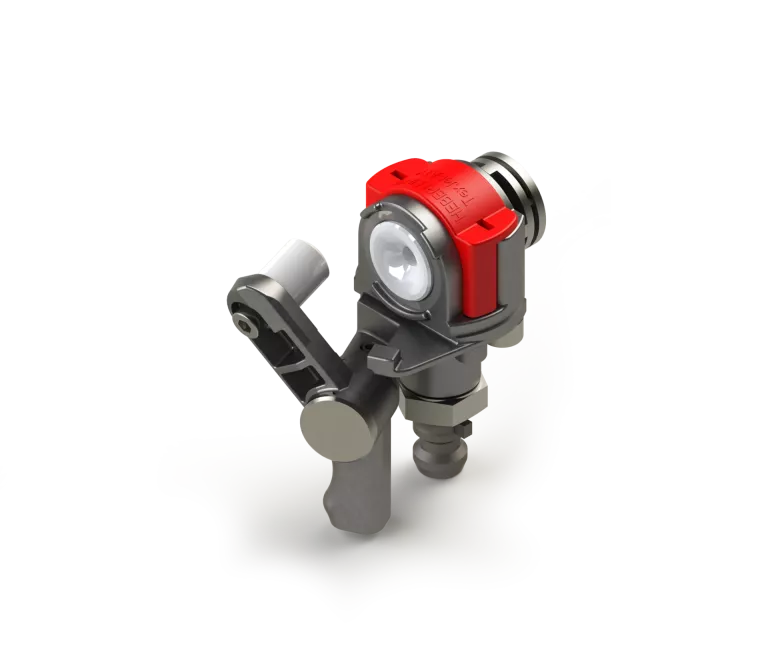
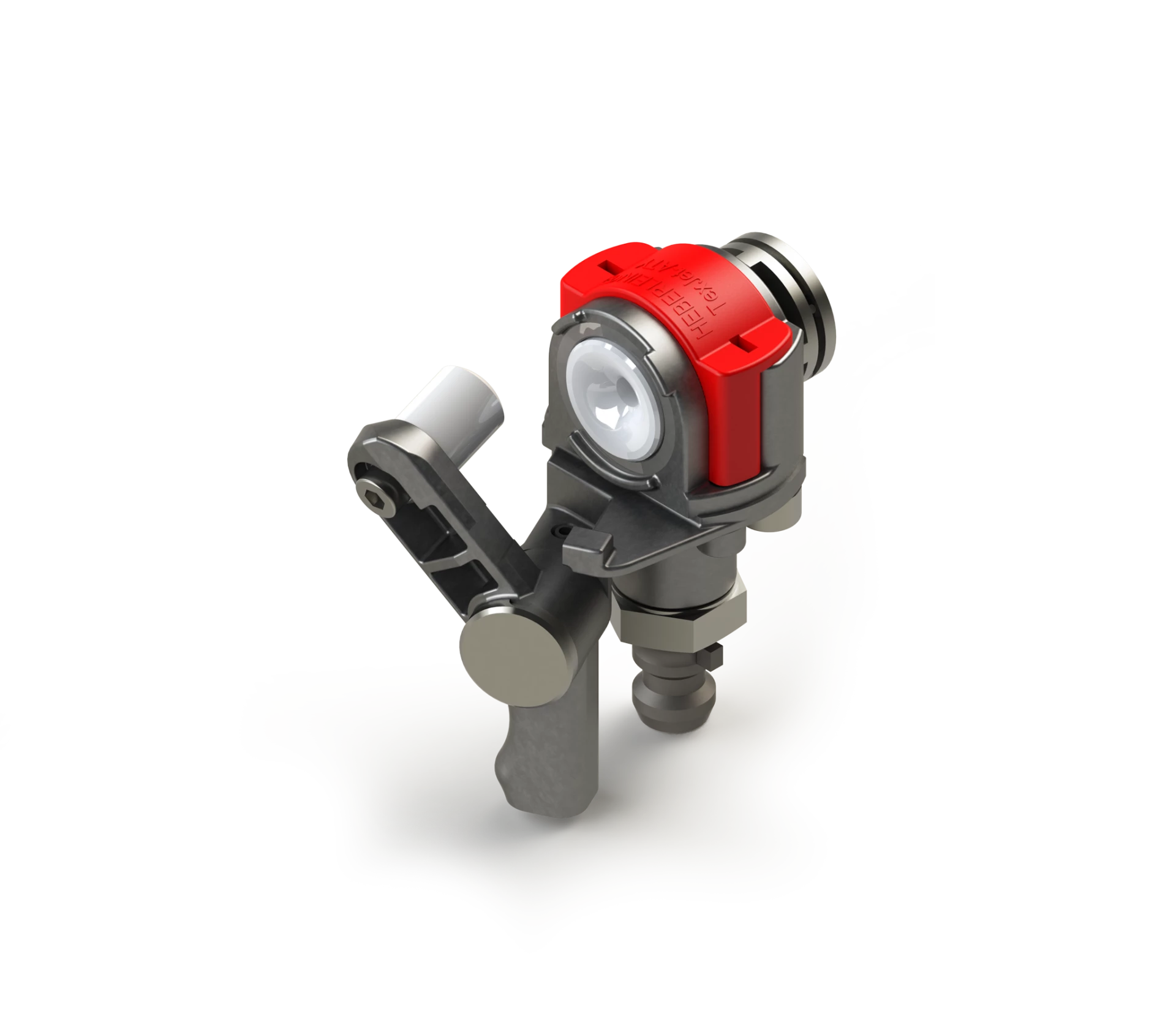
Der TexJet-ATY produziert hervorragende Garne bei hohen Verarbeitungsgeschwindigkeiten. Eingesetzt wird er zur Erzeugung sehr feiner bis groben Garnen aus Polyester, Polyamid und Polypropylen, sowie bei der Herstellung hochwertiger Flammen- und Effektgarne.
HEBERLEIN. TEXJET-ATY.
Sortiment.
Serie Dx0
Für voluminöse Garne, technische Anwendungen und Mode.
Serie Dx1
Wird zur Herstellung von Mikrofaser, Effekt- und Flammengarnen verwendet. Mögliche Endprodukte sind Sport-, Freizeitbekleidung und Nähgarne.
Serie Dx2
Besonders geeignet für Sport-, Freizeitbekleidung, Automotiv und Technische Garne.
Serie Dx3
Für ultra kompakte Garne, Automotive und Heimtextilien.
Serie Dx4
Für Mode, Sport- , Freizeitbekleidung und Heimtextilien.
Serie Dxx St
Für Glasfilamentgarne.
Technische Daten.
Einsatzbereich
| Typ | Gesamttiter Zuführung [dtex] | Einzeltiter Filamente | Max. Überlieferung | Wickelgeschwindigkeit |
|---|---|---|---|---|
| Serie DxO - Für voluminöse Garne und hohe Überlieferung | ||||
| D40 | 330 … 1100 | 0.8 … 5.5 | … 160 % | … 600 |
| D50 | 600 … 2500 | 4.0 … 12.0 | … 160 % | … 600 |
| D60 | 1800 … 3500 | 4.0 … 12.0 | … 160 % | … 500 |
| D70 | 2500 … 4500 | 4.0 … 12.0 | … 160 % | … 500 |
| Serie Dx1 – Für mehr Volumen, Deckkraft, Überlieferung und höhere Texturiergeschwindigkeit | ||||
| D11 | 60 … 250 | 0.5 … 2.5 | … 70 % | … 1200 |
| D21 | 200 … 450 | 0.5 … 2.5 | … 70 % | … 1000 |
| D41 | 330 … 800 | 0.5 … 2.5 | … 60 % | … 900 |
| Serie Dx2 – Für kompakte, besonders stabile Garne mit kleinen und dichten Schlaufen | ||||
| D002 | 10 … 50 | 0.5 … 1.5 | … 60 % | … 400 |
| D02 | 44 … 90 | 0.5 … 1.5 | … 40 % | … 800 |
| D12 | 80 … 250 | 0.8 … 3.5 | … 60 % | … 1000 |
| D22 | 150 … 480 | 0.8 … 3.5 | … 60 % | … 900 |
| D32 | 330 … 800 | 0.8 … 5.5 | … 60 % | … 800 |
| D42 | 600 … 1100 | 0.8 … 5.5 | … 60 % | … 800 |
| D52 | 600 … 2500 | 4.0 … 12.0 | … 50 % | … 800 |
| D62 | 1800 … 3500 | 4.0 … 12.0 | … 40 % | … 600 |
| Serie Dx3 – Für ultra kompakte, hoch stabile Garne | ||||
| D03 | 44 … 90 | 0.5 … 1.5 | … 40 % | … 700 |
| D13 | 80 … 250 | 0.8 … 3.5 | … 50 % | … 700 |
| D23 | 150 … 480 | 0.8 … 3.5 | … 50 % | … 700 |
| D33 | 330 … 800 | 0.8 … 5.5 | … 50 % | … 700 |
| D43 | 660 … 1100 | 0.8 … 5.5 | … 50 % | … 700 |
| Serie Dx4 – Für Effektgarne | ||||
| D14 | 60 … 250 | 0.5 … 2.5 | … 70 % | … 700 |
| D24 | 150 … 480 | 0.8 … 3.5 | … 70 % | … 700 |
| D34 | 330 … 800 | 0.8 … 5.5 | … 70 % | … 700 |
| D44 | 600 … 1100 | 0.8 … 5.5 | … 70 % | … 700 |
| Einsatzbereich bei Polypropylen-Garnen (PP) | ||||
| D42 | 150 … 480 | 3.0 … 8.0 | … 30 % | … 500 |
| D52 | 350 … 1100 | 3.0 … 8.0 | … 30 % | … 500 |
| D62 | 800 … 2200 | 3.0 … 8.0 | … 30 % | … 500 |
| D70 | 1200 … 3500 | 3.0 … 8.0 | … 30 % | … 500 |
| Serie Dxx St - Für Glasfilamentgarne | ||||
| D70 St | 1360 … 25000 | 4.0 … 17.0 µm | ||
Luftverbrauch pro Faden
| Typ | Durchmesser Luftkanal | Formel |
|---|---|---|
| D002 | 3 x 0.40 mm | qvn = 0.26 x (pe + 1) |
| D02, D03 | 3 x 0.50 mm | qvn = 0.37 x (pe + 1) |
| D11, D12, D13 | 3 x 0.60 mm | qvn = 0.54 x (pe + 1) |
| D14 | 1 x 0.90 mm | qvn = 0.40 x (pe + 1) |
| D21, D22, D23 | 3 x 0.75 mm | qvn = 0.81 x (pe + 1) |
| D24 | 1 x 1.15 mm | qvn = 0.60 x (pe + 1) |
| D32, D33 | 3 x 0.90 mm | qvn = 1.21 x (pe + 1) |
| D34 | 1 x 1.30 mm | qvn = 0.90 x (pe + 1) |
| D40, D41, D42, D43 | 3 x 1.00 mm | qvn = 1.46 x (pe + 1) |
| D44 | 1 x 1.50 mm | qvn = 1.10 x (pe + 1) |
| D50, D52 | 3 x 1.20 mm | qvn = 2.05 x (pe + 1) |
| D60 | 3 x 1.35 mm | qvn = 2.56 x (pe + 1) |
| D62 | 3 x 1.40 mm | qvn = 2.75 x (pe + 1) |
| D70 | 3 x 1.60 mm | qvn = 3.59 x (pe + 1) |
| D70 St | 3 x 1.70 mm | qvn = 4.03 x (pe + 1) |
Anforderungen Druckluft
| Überdruck | 7.0 … 14.0 bar ** |
Anforderungen an die Druckluftqualität siehe Druckluftreinheit.
Betriebsanleitung anfordern.
Sie möchten eine Betriebsanleitung zu Ihrem Produkt erhalten? Jetzt anfordern.